


Key Takeaways:
- Laundromats operate on a recurring-usage model, in which revenue is generated through repeated machine cycles rather than product sales.
- Singapore’s dense urban environment and humid climate continue to support demand for the self-service laundry concept.
- Successful operators focus heavily on location planning, machine configuration, and operational efficiency.
- The laundromat business model is manpower-light, but still requires structured oversight and maintenance planning.
- First-time entrepreneurs should evaluate long-term scalability, infrastructure suitability, and neighbourhood demographics before committing capital.
Laundromat Explained
For many first-time entrepreneurs, laundromats appear to be one of the more approachable entry points into physical retail operations. Compared to manpower-heavy industries such as F&B, the model is often perceived as operationally lean, semi-automated, and capable of generating recurring customer demand.
However, a laundromat, described purely as “installing machines and collecting payment,” oversimplifies how the business actually functions.
In Singapore, laundromats operate in a highly specific urban environment shaped by high-density living, smaller residential spaces, humid weather, and increasingly convenience-driven consumer behaviour. Success depends not only on machine ownership but also on infrastructure planning, demographic alignment, operational systems, and long-term utilisation rates.
For entrepreneurs evaluating a potential investment in a laundry business, understanding how the model works at a structural level is critical before committing capital.
What Is a Laundromat?
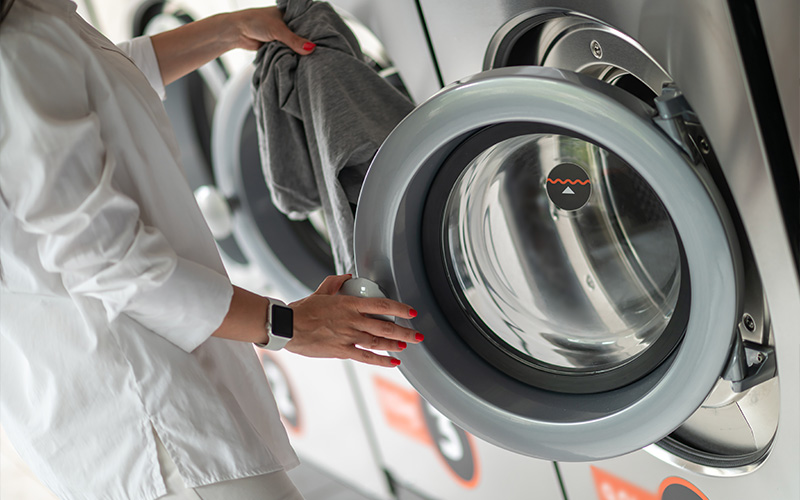
A laundromat is a self-service laundry facility where customers use shared commercial washing machines and dryers to clean and dry their clothes independently. Instead of relying on traditional full-service laundry collection, customers visit the outlet, load their laundry, select their preferred machine settings, and complete the washing and drying process on-site.
In Singapore, most modern laundromats operate on a self-service model, with machines designed for public use and often supporting cashless payment methods, automated controls, and 24-hour access. Many outlets also offer different machine capacities to accommodate a range of laundry needs, from everyday clothing to bulky items such as bedding, curtains, and comforters.
A laundromat, explained in today’s context, is no longer just a row of coin-operated machines. Modern laundromats are increasingly positioned as convenience-driven neighbourhood services that cater to busy urban lifestyles, smaller residential spaces, and households seeking faster drying solutions in Singapore’s humid weather.
For first-time entrepreneurs, having a clear explanation of the operational aspects of a laundromat helps build a stronger understanding of how the customer experience, machine layout, and service environment come together in the modern laundry industry.
Understanding the Core Laundromat Revenue Model
At its core, a laundromat functions as a pay-per-use asset business.
Unlike traditional retail models that depend on selling inventory, laundromats generate revenue through machine usage cycles. Each washer and dryer effectively becomes an income-producing asset that contributes recurring revenue throughout the day.
Revenue is generally influenced by:
- Number of completed wash and dry cycles
- Machine utilisation rates
- Peak-hour customer traffic
- Capacity demand within the neighbourhood
- Pricing structure per cycle
This recurring usage structure is one reason why many entrepreneurs find the business model attractive. Once infrastructure is operational, revenue generation becomes tied to utilisation efficiency rather than continuous inventory replenishment.
In Singapore, repeat demand is especially important. Many customers return weekly for large loads such as bedding, curtains, comforters, or family laundry that may not be practical to handle at home.
Why Laundromats Continue to Perform in Singapore
Some first-time operators mistakenly assume that laundromats serve only households without washing machines. In reality, the demand profile is much broader.
Singapore’s urban environment naturally supports the self-service laundry concept due to several structural factors.
High-Density Residential Living
Many HDB flats and condominiums have limited service yard space. Larger-capacity home washers may not always be practical, particularly for smaller units.
This creates demand for external laundry solutions even among appliance-owning households.
Humid Climate and Drying Limitations
Singapore’s tropical climate can significantly slow indoor drying, especially during monsoon periods. Commercial dryers offer convenience, speed, and reliability that many households value.
Bulk Laundry Demand
Items such as blankets, curtains, mattress covers, and large fabric loads are difficult to wash efficiently at home. Laundromats bridge this capacity gap.
Convenience-Led Consumer Behaviour
Working professionals increasingly prioritise convenience and time efficiency. Many customers combine errands, meal runs, or grocery trips alongside laundry routines.
This recurring behavioural demand helps explain why the laundromat business continues expanding across residential estates.
Machine Configuration Plays a Major Role
One of the most overlooked aspects when starting a laundromat is machine mix planning.
Entrepreneurs sometimes focus heavily on aesthetic renovation while underestimating the impact of capacity configuration on profitability.
A typical laundromat setup may include:
- 12kg–15kg medium-capacity washers
- 18kg–25kg larger-capacity units
- Commercial dryers
- Cashless payment systems
- Folding or waiting areas
However, the ideal configuration differs based on neighbourhood demographics.
Family-Oriented Estates
HDB estates with larger family populations may see stronger demand for higher-capacity machines due to bedding and bulk-washing needs.
Dormitory and Shared Housing Areas
Dormitory clusters often require durable commercial machines capable of handling high-frequency usage.
Mixed Residential Zones
Areas with varied demographic profiles may benefit from a balanced mix of machines rather than concentrating heavily on oversized units.
This is where many beginner tips for laundromat business planning become highly practical. Over-investing in large machines without corresponding demand may reduce utilisation efficiency, while under-sizing capacity can create congestion during peak hours.
Machine planning should therefore be tied directly to neighbourhood behaviour patterns rather than assumptions.
Laundromats Are Lean, But Not Fully Passive
One reason entrepreneurs explore laundromats is the perceived potential for passive income.
While laundromats generally require less manpower compared to restaurants or retail stores, they are not completely hands-off operations, despite the perceived potential for passive income.
A professionally managed laundromat still requires:
- Routine cleaning schedules
- Machine servicing and preventive maintenance
- Customer support handling
- Payment system monitoring
- Utility management
- Operational troubleshooting
Poor maintenance standards can quickly affect customer retention. A single malfunctioning machine may create negative perceptions that reduce repeat usage.
A properly structured laundromat framework focuses heavily on operational consistency rather than simply reducing labour costs.
Understanding the Capital Structure
Laundromats are generally considered capital-intensive but inventory-light businesses.
Most upfront expenditure is concentrated in:
- Commercial washers and dryers
- Plumbing and electrical infrastructure
- Renovation works
- Ventilation systems
- Utility setup
- Payment technology integration
Unlike retail stores, laundromats typically do not face inventory spoilage, unsold seasonal products, or continuous stock management issues.
This reduces certain operational risks associated with traditional retail businesses.
However, infrastructure decisions become extremely important because laundromat equipment is not easily relocated or reconfigured after installation.
For first-time operators evaluating a potential laundromat investment, upfront planning often has a greater impact than later operational adjustments.
Location Selection Often Determines Performance
Few factors influence laundromat performance more heavily than location quality.
In Singapore’s compact urban environment, even small differences in footfall patterns can significantly affect machine utilisation rates.
Key location considerations include:
- Walking accessibility from residential blocks
- Visibility from main roads
- Existing competitor density
- Nearby dormitories or shared housing
- Parking accessibility
- Proximity to MRT stations
- Estate demographic profile
A premium machine setup placed in a weak location may still underperform.
Conversely, a strategically positioned laundromat within a dense residential cluster can generate strong recurring demand even with relatively straightforward equipment configurations.
This is why experienced operators often prioritise demographic mapping before making a major investment in a laundry business.
However, scalability should not rely on duplication alone.
Different HDB estates may exhibit markedly different customer usage patterns depending on their age profiles, household sizes, rental demographics, or surrounding amenities.
Successful scaling usually depends on adapting the self-service concept to each location rather than blindly replicating identical configurations.
Common Misconceptions First-Time Entrepreneurs Should Avoid
Assuming All Locations Perform Equally
Not every residential area supports identical laundry demand patterns. Market mapping remains essential.
Treating Laundromats as Completely Passive
Even automated businesses require operational discipline and ongoing oversight.
Overestimating Immediate Profitability
Utilisation rates often take time to stabilise as customer habits develop.
Underestimating Infrastructure Requirements
Older shop units may present plumbing, drainage, electrical, or ventilation constraints that affect feasibility.
These operational realities do not make laundromats unattractive. Instead, they highlight why structured planning is important when evaluating a laundromat business opportunity.
A Simple Evaluation Framework for New Entrepreneurs
Before committing to a laundromat setup, entrepreneurs should assess several key areas:
| Evaluation Area | Key Questions |
| Demand | Is there sufficient residential density and recurring laundry behaviour nearby? |
| Competition | How saturated is the surrounding laundromat market? |
| Infrastructure | Can the unit support drainage, electrical load, and ventilation requirements? |
| Capacity Planning | Does the machine mix match the demographic profile? |
| Operations | Is there a clear maintenance and service structure? |
| Financial Planning | Can projected utilisation support rental and utility costs in the long term? |
This structured approach helps first-time operators evaluate whether the opportunity aligns with realistic operational expectations.
Conclusion
A laundromat, explained properly, is not simply a low-manpower retail concept. It is a recurring usage business built around infrastructure planning, customer convenience, operational efficiency, and demographic alignment.
For first-time entrepreneurs in Singapore, the appeal of the model lies in its relatively lean operations, scalability potential, and recurring neighbourhood demand. However, strong performance still depends on disciplined planning, proper machine configuration, strategic location selection, and long-term operational management.
If you are exploring opportunities to start a laundromat, Fresh Laundry supports entrepreneurs with structured planning, guidance on machine configuration, and operational insights tailored to Singapore’s environment.
Contact us today if you are evaluating your first outlet or assessing a larger-scale business investment in the self-service laundry industry. Our team can help you better understand the operational and infrastructure considerations involved in building a sustainable laundromat business.
 Login with Google